
|
        
|
|
CONTACT US
Click Here! |
| This site is best viewed with a screen resolution of 800 X 600 at high colour settings |
|
Flask List
Acacallis-Ancistrochilus Angraecum-Aspasia Barkeria-Broughtonia Bulbophyllum Capanemia-Catasetum Cattleya Cattleyopsis-Cycnoch, Cymbidium-Cyrtorchis Dendrobium-Dossinia Encyclia-Eulophiella Galeandra-Jumellea Laelia-Lycaste Macodes-Nephalaphyll, Odontogloss,-Oncidium Paphiopedilum-Psychilis Rangaeris-Stenocoryne Tainia-Zygopetalum |
|
Plant List
Acampe-Bulbophyllum Cattleya-Dossinia Encyclia-Promeaea Renanthera-Vanda |

Nervilia: Care and cultureFor further details Nervilias in the wild click here More Nervilias Here Contact ianbpon(at)speciesorchids.com for available species as dormant tubers . Substitute @ for ( at) to avoid spam.
Terrestrial speciesSix species of Nervilia grow naturally in North Queensland, out of approximately 65 species found world wide. This terrestrial genus is found widespread from Africa to Asia, Japan, Samoa and Australia. The genus is seldom seen in collections, and rarely listed in countries of origin. It appears to be a plant that is not recognised as an orchid, although its close relatives, the genus Pogonia, is a commonly cultivated plant in its native Japan. Of the six Australian species, four are found close to Townsville, and have been cultivated in a few collections for many years. The four are described below, the typical Nervilia plant being a subterrainian tuber with a single leaf. The other two species Nervilia aragoana ( also South East Asia) and Nervilia crociformis are from Cape York. During the dry winter months, the plants become dormant, reduced to round white bulbs underground, and should be placed where the pot remains dry, with only an occasional water, normally enough from natural rainfall. Each spring, the bulbs can be repotted just before the leaf emerges. The bulbs should be potted about 2.5cm below the surface of the soil mix. Shade conditions about that for Phalaenopsis. The basic requirements are a good rich soil mix, with leafmould and some coarse gravel to provide good drainage, and large deep pots to best promote multiplication of the plants, which produce new bulbs on 2 or more adventitious stolons from the underground leaf stem each season. Each season, with the onset of summer rain and warmth, the larger underground tubers will each send up a flower spike. Each species has its own recognisable flower , and its own distinctive leaf which is produced after the flowers are finished. Nervilia Dallachyana (FM Bailey) syn N. discolor
In bright light, the leaf has a reflective translucence, appearing to sparkle. As a shade lover, this may be a protective mechanism to prevent burning from excess sunlight, by reflecting light from the leaf. It makes an attractive plant when not in flower, and will double and triple its colony size in a season, an excellent specimen pot. Currently this species has been reclassified to the original find Nervilia Dallachyana (FM Bailey).Named after an early Queensland surveyor and pathfinder, his botanical immortality sadly lost with the reclassification of the species to Nervilia discolor, and then yet again to Nervilia plicata. Nervilia holochila
Once a common species around Townsville, but now hard to find in the large colonies that existed previously, possibly due to the drought conditions over the past years. N. holochila perhaps requires more sunlight as it grows in more exposed places. . Nervilia uniflora
The 5cm leaf is very distinctive, heart shaped, on a petiole which sits the leaf 5 to 6 cm above the ground. The top surface is rich green, the underside purple, the margins somewhat wavy. The flowers , to 5cm across, are borne singly on tall spikes, sepals and petals bronze green, the large broad, pointed lip bright pink purple. A showy little plant with charming bright flowers, that can triple its colony size in one season with good conditions, and makes an excellent specimen pot. Three small colonies in the wild have been reported near Townsville. Nervilia peltata
The flowers, one or two on a spike, about 2 cm across , are pale green, the lip white. It is the minature of the group, and has a slightly different growing season, emerging later with the wet season and continues to grow after the above species have lost their leaves for winter, a fact that should be noted in its culture. This species has been known for many years in 2 or 3 small colonies in the Cardwell district. At the time (1966) it was thought by this author to be the long lost Nervilia pachystomoides(FM Bailey). This proved incorect when a specimen of Didymoplexis pallens was identified with Baileys original description of the Nervilia. Nervilia pachystomoides thus turned out to be Didymoplexis pallens. Unfortunately, land clearing and roads have removed all but a few plants in one small colony. It is also recorded from Hinchinbrook Island and from Cape York, and a small colony exists in national park near Ingham. It multiplies more rapidly in cultivation, see photos below and note the unusual cupped leaf that does hold water. CultureThe species are easy enough to grow if the following rules are observed. During the cool dry winter, when the leaves have died back, place the pot where it is not watered except for natural rainfall or on a weekly basis to prevent hard drying out. Repot if possible each season, in spring before the summer rains, using fresh soil mix, leafmould and some coarse gravel, in a deep pot, with good drainage. When in leaf, water heavily, and grow in a very shady position. In the Nursery, plants are grown under cover to prevent damage to leaves from dripping water during the wet season.In cooler climates it may pay to place the dormant pots in a warm place for winter. A little bark or gravel on top of the potting media stops water splash and soil over the leaves of the species that hug the ground. View your plants occasionally in the sunlight to appreciate the subtle jewel orchid qualities of this genus even when not in flower. Nervilia Aragoana:India,Burma,Thailand,Malayasia, Indonesia,New Guinea,Australia. Nervilia crociformis:Africa,Madagascar,India,SE Asia,Philippines,Samoa,Vanuatu,New Guinea,Australia. Nervilia Dallachyana aka Nervilia discolor, Nervilia plicataNervila holochila Nervilia peltata Nervilia unifloraFor further details Nervilias in the wild click here Nervilia peltata
........................................................................................ Nervilia Aragoana
Nervilia crociformis
|
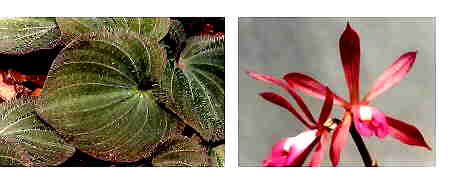
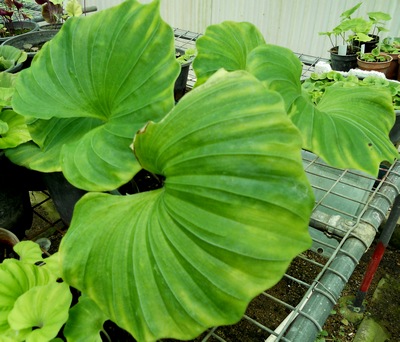
 This shade growing species has a large round to heart shaped leaf, to 20cm across when well cultivated. The leaves appear "quilted", with raised veins and hairs on the leaf, and tend to hug the ground. The leaf colour is usually green suffused purple, with clear emerald green and bronze purple forms. This species is internationally wide spread, and in other countries, varigated leaf forms are known. The flowers are usually paired, to 5 cm across, sepals and petals bronze green, the lip purple, crested. Like all Nervilias, the flowers have a similar shape to that of a small rupicolus Laelia.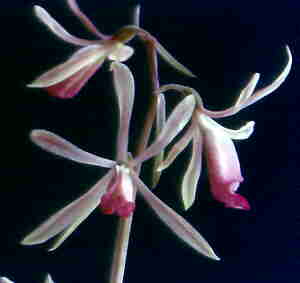
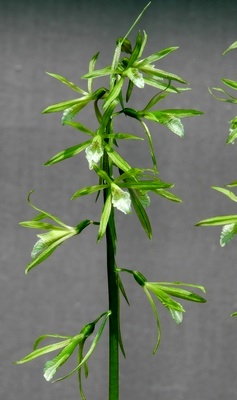
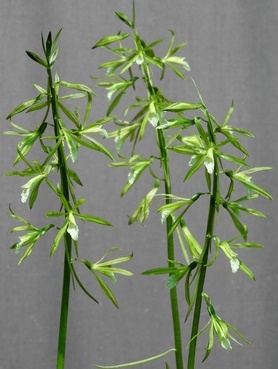
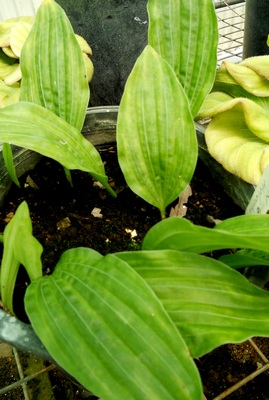 A species found in more open, drier country. The leaf and petiole is up to 20 cm long, to 7cm wide, lance to oval shaped, nearly upright, with longitudinal veins. The flower spike has several flowers, each to about 2.5 cm across, sepals, petals pale green, brown green, the lip white flushed pink.
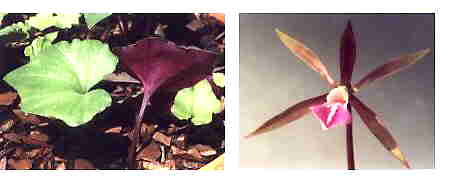 Perhaps a much rarer species than the above, rarely seen in the wild. The original plants came from Ken MacPherson, Proserpine, and have been in continuous cultivation in at least one collection in Townsville for about 30 years. They were collected from road works in the Proserpine area.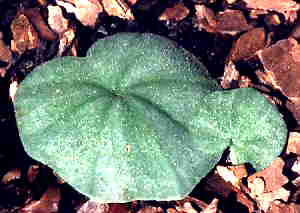
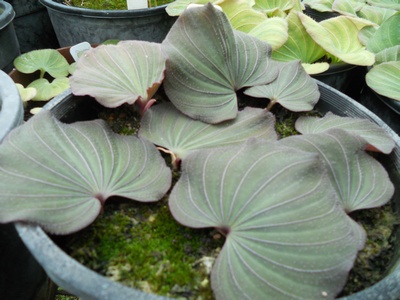
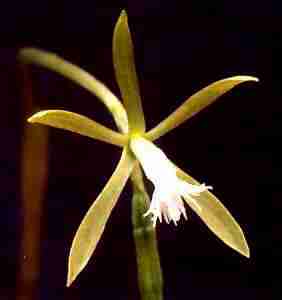 A recently named species that should also be considered rare. It is a small species, the leaf to 3cm diameter, hugs the ground, and is a grey green colour, with 5 or 6 radiating veins, and a sheen from reflective leaf cells. It could be easily mistaken for a grey green mushroom on the forest floor.( Leaf up to 7.5cm in cultivation, photo of colony in 20cm pot)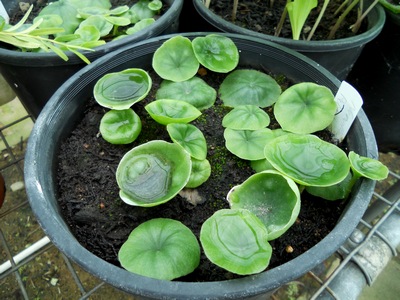



May be reproduced provided source acknowledged.